
Plasma

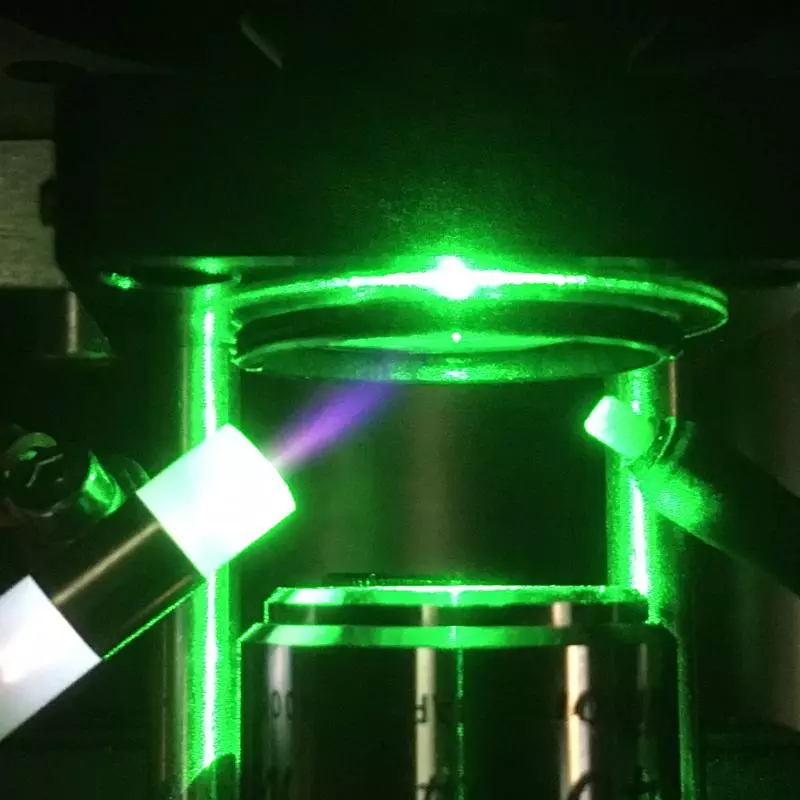
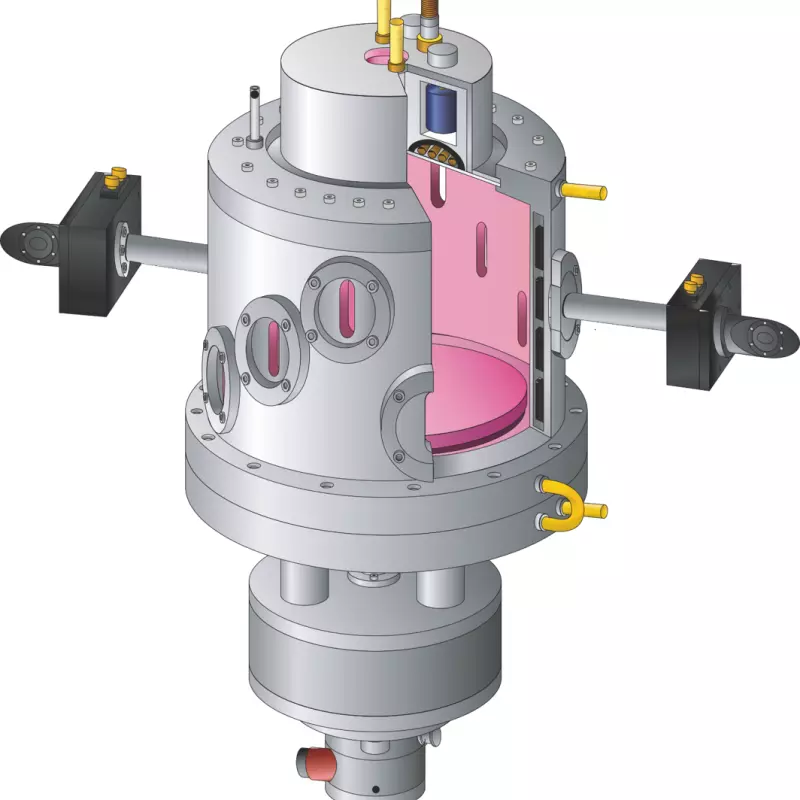
Plasma, often called the fourth state of matter, is characterised by partial or total ionisation of gas phase species. A multitude of systems fall within this definition, from natural plasmas like the auroras through to man-made plasmas like those utilised in plasma arc welding. All forms of plasma contain free electrons and ions and it is these that give plasma interesting and useful chemistry. Within The Ritchie Group our plasma research focuses on two main varieties of man-made plasma: low pressure industrial plasma and atmospheric pressure plasma jets. Low pressure industrial plasmas are used to manufacture semi-conducting oxide and nitride layers. These plasmas are confined to a plasma chamber and contain a wide range of excited and atomic species, giving these systems complex and interesting chemistry. Atmospheric pressure plasma jets (APPJ's) are formed by applying a strong alternating field to a flow of gas. The resulting plasma jet has been found to have sterilising properties and this has resulted in growing use of these systems in medical settings.
plasma chamber

Low pressure plasma

The research within the group into low pressure plasmas focuses on finding densities, temperatures and kinetic parameters for the most important species in a given plasma system. This has included measurements of atomic, ionic, and metastable species. Measurements are made by combining the specificity of laser spectroscopy with the sensitivity of cavity enhanced optical techniques to measure both weakly absorbing and low density species. Experiment can also be combined with kinetic modelling so that measurements of a few key species provide insight into the chemistry of the plasma as a whole.
plasmapicture

Atmospheric pressure plasma

The ability of plasma jets to act as sterilising agents is poorly understood. Reactive oxygen and nitrogen species (RONS) are considered the most likely candidate to be responsible for the jets ability to kill bacteria. Measuring such species, understanding their kinetics and investigating their interactions with biological matter is therefore of high interest. Our work in this area has included utilising the Faraday effect within an optical cavity to target plasma produced radical species with great specificity (e.g. HO₂) and probing density profiles (e.g. of NO) using inverse Abel transform.

People working in this area

dsc01662

Professor Grant Ritchie

rob

Dr Rob Peverall

gus

Professor Gus Hancock

charlie3

Charlie Kniebe-Evans

Paolo

Paolo Cicuta

Roger

Dr Roger Patrick

sam

Dr Sam Rogers